
 Home
Home Shop
Shop New Arrivals
 Vape Juice
 Salt Nicotine
 Disposable Vape
 Hardware
 Nicotine Pouches
 Clearance
 Blog
BlogUncategorized
Top Tips for Battery Safety | Vape Battery Guide

Aug
Your vape is only as safe as the battery inside it. Whether you run a sleek pod system, a regulated box mod, or a mechanical mod with rebuildable coils, that little lithium-ion cell is a concentrated package of energy — and when it’s mishandled, it can overheat, vent, or in rare cases catch fire. The good news? Almost every vape battery incident is preventable with a few simple habits.
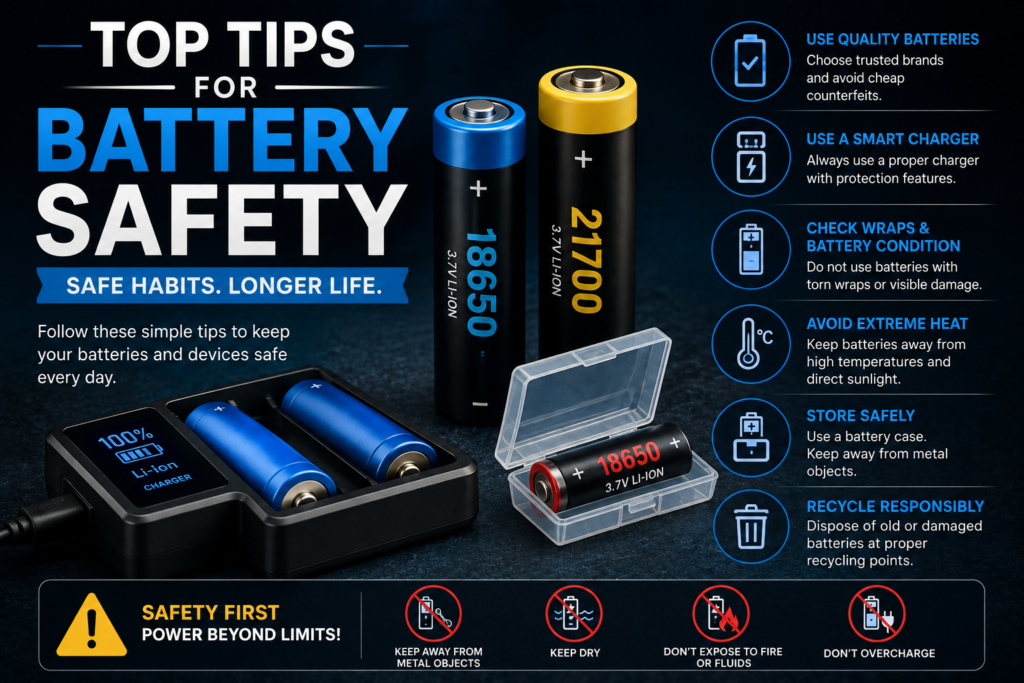
At EJuice Vape Distro, we want you to enjoy your vape with total peace of mind. That’s why we’ve put together these Top Tips for Battery Safety — a practical, no-nonsense guide to keeping your batteries healthy, your device reliable, and yourself safe.
Why Vape Battery Safety Matters
Modern vapes are powered by lithium-ion batteries, the same technology found in phones and laptops. These cells pack impressive power into a tiny space, but they can fail if damaged, overcharged, short-circuited, or exposed to extreme heat. When a lithium-ion cell fails catastrophically, it enters a state called thermal runaway — a rapid, self-feeding overheating reaction.
The U.S. Fire Administration documented 195 separate e-cigarette fire and explosion incidents reported in U.S. media between 2009 and 2016, resulting in 133 injuries. Because of the tube-like shape of many devices, a failing battery can behave like a projectile. The takeaway isn’t fear — it’s respect. Follow good habits and your risk drops to nearly zero.
Top Tips for Battery Safety: Storage Done Right
How you store your batteries when they’re not in use is one of the biggest factors in vape battery safety.
- Never carry loose batteries in your pocket or bag. This is the number-one cause of preventable accidents. A loose 18650 cell rolling around with your keys, coins, or other batteries can short circuit instantly. Remember: the entire metal outer casing of an 18650 is the negative terminal, so any metal contact bridging the terminals creates a dangerous short.
- Always use a dedicated plastic battery case. These cases cost a couple of dollars and prevent the terminals from ever touching metal. Keep one in your bag, car, and at home.
- Store batteries in a cool, dry place. Aim for a moderate room temperature, ideally around 59°F (15°C), and keep them out of direct sunlight and away from moisture.
- For long-term storage, keep cells at a partial charge. Storing lithium-ion batteries at roughly 40–50% charge minimizes stress and slows capacity loss compared to storing them full or empty.
Charging Safety: Avoid Overcharging and Bad Chargers
Charging is where a lot of people cut corners — and where things can go wrong. Vape charger safety comes down to a handful of rules.
Use the Correct Charger
Always use the charger supplied with or approved by the manufacturer of your device or batteries. A mismatched or cheap “universal” charger can deliver the wrong voltage or current. Lithium-ion cells should never be charged above their rated maximum of 4.2 volts per cell.
Never Charge Unattended
Do not charge your vape overnight or leave it charging while you’re asleep or out of the house. Being nearby means you can react immediately if a battery starts to swell, hiss, or get unusually hot.
Charge on a Safe Surface
Always charge on a hard, non-flammable surface like a countertop — never on a bed, sofa, or a pile of papers. Unplug the device once it’s fully charged rather than leaving it on the charger indefinitely.
Be Careful With USB Charging
Charging through a random laptop USB port or an uncertified wall adapter can supply improper current. Use a known-good, appropriately rated power source. For longevity, try to keep your cells within roughly a 20–80% charge window rather than constantly draining them to empty or holding them at 100%.
Know Your Battery Types: 18650 Safety and Beyond
Understanding your battery type helps you use it safely.
- 18650: The classic removable cylindrical cell, widely used in box mods and mechanical mods. 18650 battery safety is especially important because these are user-replaceable and often carried as spares.
- 20700 and 21700: Larger cylindrical cells offering more capacity and higher current, common in newer high-power mods.
- Built-in batteries: Found in most pod systems and beginner devices. You can’t swap these, so charging safety and avoiding physical damage are your main concerns.
A genuine 18650 tops out at around 3500mAh in capacity. If you see a cell advertised as “9900mAh,” it’s a fake.
Signs of Battery Damage — and When to Replace
Inspect your batteries regularly, ideally before every use. Retire or safely recycle any cell showing:
- Torn, nicked, or peeling wrap — the plastic heat-shrink insulation is the cell’s only external protection.
- Dents or physical deformation of the metal casing.
- Corrosion or discoloration on the terminals.
- Venting — hissing, leaking, or a chemical smell.
- Swelling or bulging — a swollen lithium-ion cell is failing and must be removed from service immediately.
- Excessive heat during use or charging, or an inability to hold a charge.
Even without visible damage, many vapers replace heavily used 18650 cells after about a year, or whenever runtime noticeably drops.
The Importance of Battery Wraps
That colorful plastic sleeve isn’t decoration — it’s critical insulation. The wrap plus the insulator ring around the positive end are all that stand between the bare metal can and a short circuit.
- Never use a battery with a damaged wrap. Even a small tear near the top rim can cause a short.
- Rewrap damaged cells using a correctly sized replacement wrap and insulator ring — but only if the underlying cell is otherwise perfect (no dents, corrosion, or venting). Rewrapping supplies are cheap and easy to find.
Ohm’s Law and Safety Limits for Mechanical Mods
If you use a mechanical mod or rebuildable atomizer, this section is essential. Unlike regulated mods, mech mods have no protective circuitry — nothing stops you from building a coil that draws more current than your battery can safely handle. You are the safety chip.
Ohm’s Law: Current (A) = Voltage (V) ÷ Resistance (Ω).
At a fully charged 4.2V, a 0.2Ω coil draws about 21 amps; a 0.15Ω coil draws about 28 amps. Your build’s current draw must stay safely below your battery’s Continuous Discharge Rating (CDR) — the maximum sustained current the cell can deliver safely.
Crucially, use the real, independently tested CDR, not the inflated marketing numbers printed on the wrap. Independent testers have found many popular cells have a true continuous rating in the 20–30A range, well below the “40A” some wraps claim. If you’re not comfortable calculating this, stick with a regulated device.
Avoid Extreme Temperatures
Heat is the enemy of lithium-ion batteries.
- Never leave batteries or your vape in a hot car or direct sunlight. Car interiors can soar past 140°F (60°C), which dramatically accelerates degradation and failure risk.
- Never charge a battery that’s below freezing (32°F/0°C). Charging a frozen cell causes permanent internal damage. Let a cold battery warm to room temperature first.
Buy Batteries From Reputable Sources
Counterfeit cells are one of the biggest hidden dangers in vaping. Fakes are re-wrapped, lower-grade cells with grossly overstated capacity and amp ratings — meaning you could push a cell far past its real limit without knowing.
- Buy only genuine cells from reputable manufacturers such as Samsung, Sony/Murata, LG, Molicel, and Panasonic.
- Purchase from authorized, trusted retailers and distributors rather than random marketplace listings.
- Watch for red flags: implausible capacity claims, prices far below market, and poor-quality wrap printing.
General Vape Battery Maintenance Best Practices
- Keep battery terminals and contacts clean and free of e-liquid residue.
- Rotate between battery sets so pairs age evenly (in dual-battery mods, always use a matched, married pair).
- Recycle old lithium-ion batteries at a proper e-waste or battery recycling point — never throw them in household trash.
- When in doubt, ask your vape retailer. A good shop would rather answer questions than see a customer get hurt.
Conclusion: Vape Smart, Vape Safe
Battery safety isn’t complicated — it’s about a handful of consistent habits: store cells in a case, use the right charger, inspect your wraps, respect temperature limits, and buy authentic batteries from sources you trust. Follow these Top Tips for Battery Safety and you’ll enjoy a smoother, safer, longer-lasting vaping experience.
At EJuice Vape Distro, we’re committed to helping you vape responsibly. Browse our full range of premium e-liquids, quality devices, and trusted vaping accessories — and shop with confidence knowing you’re buying from a source that puts your safety first. Have a battery question? Reach out to our team anytime. Stay safe, and happy vaping!
