
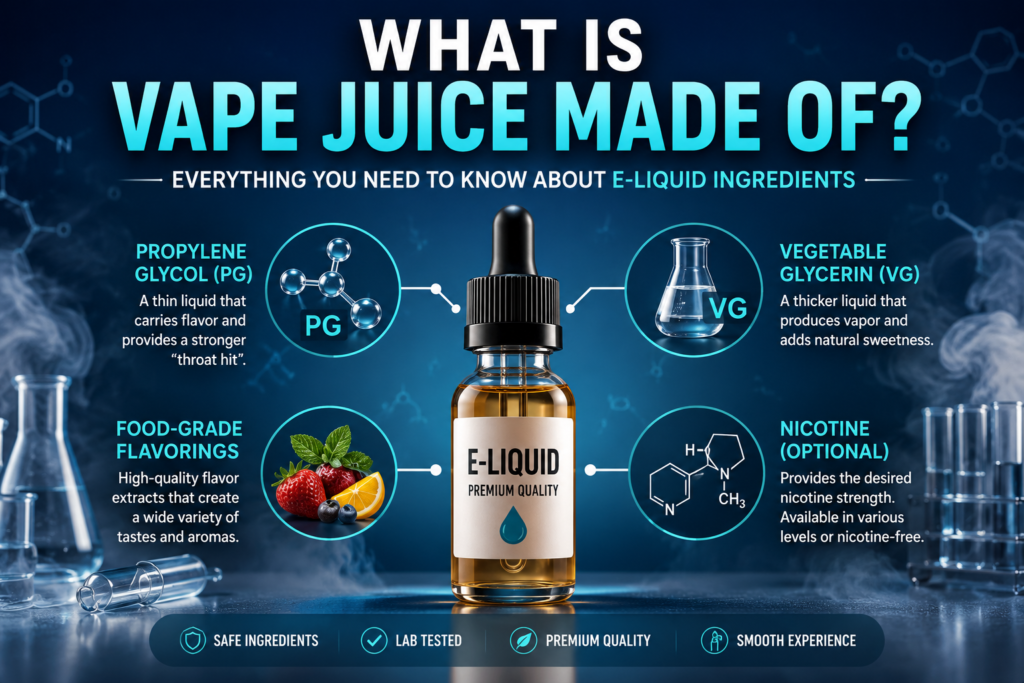
Vape juice, also called e-liquid, is made from just 4 simple ingredients: Vegetable Glycerin (VG), Propylene Glycol (PG), flavoring, and nicotine (which is optional). That’s it. In this guide, we break down each ingredient in plain, easy words so you know exactly what you are vaping.
Quick Answer
Vape juice has 4 main parts:
- VG (Vegetable Glycerin) – makes big, thick clouds
- PG (Propylene Glycol) – carries the flavor and gives a “throat hit”
- Flavoring – food-grade flavors that make it taste good
- Nicotine – optional, gives the “hit” that smokers look for
Now let’s look at each one in detail.
1. What Is VG (Vegetable Glycerin)?
VG is a thick, clear liquid with a slightly sweet taste. It comes from plants like soybean, coconut, or palm oil.
What VG does in vape juice:
- Makes big, thick vapor clouds
- Gives a smooth and soft feel when you inhale
- Adds a little natural sweetness
VG is used in food, cosmetics, and medicine too. It is thick, so juice with a lot of VG works best in big tanks with strong coils (called sub-ohm tanks). If you use high-VG juice in a small pod, it may not soak into the coil well.
2. What Is PG (Propylene Glycol)?
PG is a thin, clear liquid with almost no smell or taste. It is man-made but is very common — it is used in food, medicine (like asthma inhalers), and cosmetics.
What PG does in vape juice:
- Carries the flavor so you can taste it clearly
- Gives the “throat hit” (that sharp feeling at the back of your throat, similar to smoking)
- Soaks into coils easily, so it works well in small pods and starter kits
Common myth: Some people think PG is the same as antifreeze. This is not true. PG is safe and is different from the toxic chemical (ethylene glycol) used in car antifreeze.
3. VG/PG Ratio — Why It Matters
The “ratio” tells you how much VG and how much PG is in the bottle. For example, 70/30 means 70% VG and 30% PG.
| Ratio | What You Get | Best For |
|---|---|---|
| 50/50 | Balanced flavor, good throat hit, medium clouds | Small pods, starter kits, nicotine salt juice |
| 60/40 | A bit more cloud, still strong flavor | Slightly bigger pods |
| 70/30 | Big clouds, smooth hit, mild throat hit | Sub-ohm tanks, big devices |
| 80/20 (Max VG) | Huge clouds, very smooth, soft throat hit | Cloud chasing, high-power devices |
Simple rule:
- More PG = stronger throat hit + clearer flavor (good for small pods)
- More VG = bigger clouds + smoother hit (good for big tanks)
4. Nicotine: Freebase vs. Nicotine Salt
Nicotine is not required — you can buy 0mg (no nicotine) juice too. But most people who are switching from cigarettes use nicotine juice.
There are 2 types of nicotine used in vape juice:
Freebase Nicotine
This is the classic, original type of nicotine used in vaping. It gives a strong, sharp throat hit, so it works best at lower strengths (3mg, 6mg, 12mg, 18mg). It is a good match for bigger, more powerful devices.
Nicotine Salt
Nicotine salt is nicotine mixed with an acid to make it smoother. This lets companies make much stronger juice (25mg, 35mg, 50mg) without a harsh throat hit. It became popular because of pod devices like JUUL. It is best for small, low-power pod systems and is popular with people who smoke a lot and want a quick, strong hit.
Important Safety Tip: Never use very strong nicotine salt (35mg or 50mg) in a big sub-ohm tank. Because big tanks make more vapor per puff, this can give you too much nicotine at once and make you feel sick or dizzy. Keep strong nic salts for small pod devices only.
Where Nicotine Comes From
Nicotine can come from the tobacco plant (traditional) or be made in a lab (called “synthetic” or “tobacco-free nicotine”). Both are the same nicotine chemical. Since 2022, both types are regulated the same way by the FDA.
5. What Are Flavorings Made Of?
Flavorings usually make up about 5% to 15% of the bottle. They are food-grade flavors — the same type used in candy, drinks, and baked goods — mixed into a PG base.
There are two types:
- Natural flavors – made from real plant or fruit sources; taste more authentic
- Artificial flavors – made in a lab; often taste stronger and last longer
Important note: “Food-grade” means it is safe to eat, but that does not always mean it is 100% proven safe to inhale for years. This is why it’s important to buy vape juice from trusted, well-known brands that test their products.
6. Is Vape Juice Safe? The Diacetyl Question
You may have heard about “popcorn lung.” Here is the simple truth:
What happened: Diacetyl is a buttery-flavor chemical. Years ago, factory workers who breathed in huge amounts of it at their jobs (making popcorn) got a lung disease. Because of this, some early vape juices that contained diacetyl caused concern.
What changed: Because of this concern, almost all major vape juice brands stopped using diacetyl. It is now banned in e-liquids in the UK and Europe, and most trusted US brands do not use it either.
The facts:
- There is no confirmed case of “popcorn lung” caused by vaping.
- Studies show that regular cigarettes actually contain far more diacetyl than vape juice ever did.
Still, it’s smart to buy juice from brands that lab-test their products and clearly say “diacetyl-free” on the label.
7. How to Spot Good Quality Vape Juice
When buying e-liquid, look for these signs of a trustworthy, well-made product:
- USP-Grade PG/VG – means the ingredients are pharmaceutical-grade (very pure)
- Made in a clean facility – top brands mix juice in clean, controlled rooms
- Lab-tested – the brand shares test results (called a COA) showing nicotine level and no harmful chemicals
- Child-resistant cap – required by US law, protects children from accidental access
- Clear labeling – shows nicotine strength, PG/VG ratio, and ingredients
8. Vape Juice Rules in the USA (Simple Overview)
In the United States, e-liquids are controlled by the FDA (Food and Drug Administration) as tobacco products. Here are some simple facts about the current rules:
- Companies must apply to the FDA to legally sell their vape products.
- As of 2026, only a small number of vape brands have full FDA approval — mostly big pod brands, not open bottle e-liquids.
- This does not mean other vape juices are illegal or dangerous — it means the FDA review process is still ongoing for most brands.
- The FDA has increased efforts to stop illegal, unregulated vapes (often imported) from reaching the market, especially ones marketed to minors.
Important: Vape products are for adults only (21+ in the USA) and are not risk-free. Nicotine is addictive. These products are not recommended for non-smokers, minors, or pregnant women.
Final Thoughts
Vape juice is simple at its core — just VG, PG, flavoring, and (optional) nicotine. But small differences, like the VG/PG ratio or the type of nicotine, can completely change how a juice feels and tastes. Knowing what’s inside your bottle helps you choose the right e-liquid for your device and your needs.
Always buy from trusted retailers who use lab-tested, quality ingredients — this way, you know exactly what you’re vaping.
This article is for informational purposes only and does not constitute medical advice. Vaping products are intended for adult smokers 21+ and are not risk-free.