
If you vape and you’re also serious about your workouts, you’ve probably asked yourself this question at some point: does vaping affect fitness? It’s a fair question, especially with so many mixed opinions floating around online. Some people swear vaping hasn’t changed their gym performance at all, while others notice they get out of breath faster or take longer to recover after a workout.
The truth sits somewhere in between — and it’s backed by real science. In this article, we’ll break down exactly how vaping interacts with your cardiovascular system, lungs, stamina, and recovery, and share practical tips so you can enjoy vaping without sabotaging your fitness goals.
Quick Answer: Yes, Vaping Can Affect Fitness
Let’s not sugarcoat it — vaping does have measurable effects on physical performance. Nicotine, the key ingredient in most e-liquids, is a stimulant that affects your heart rate, blood pressure, and blood vessels. Over time, regular vaping has been linked to reduced exercise capacity and lower oxygen efficiency during workouts compared to people who don’t vape or smoke.
That said, here’s the important context: vaping is still considered significantly less harmful than smoking cigarettes. For people who smoke, switching to vaping is generally seen as a step in a healthier direction. But if fitness is your priority, understanding exactly how vaping interacts with your body helps you make smarter choices.
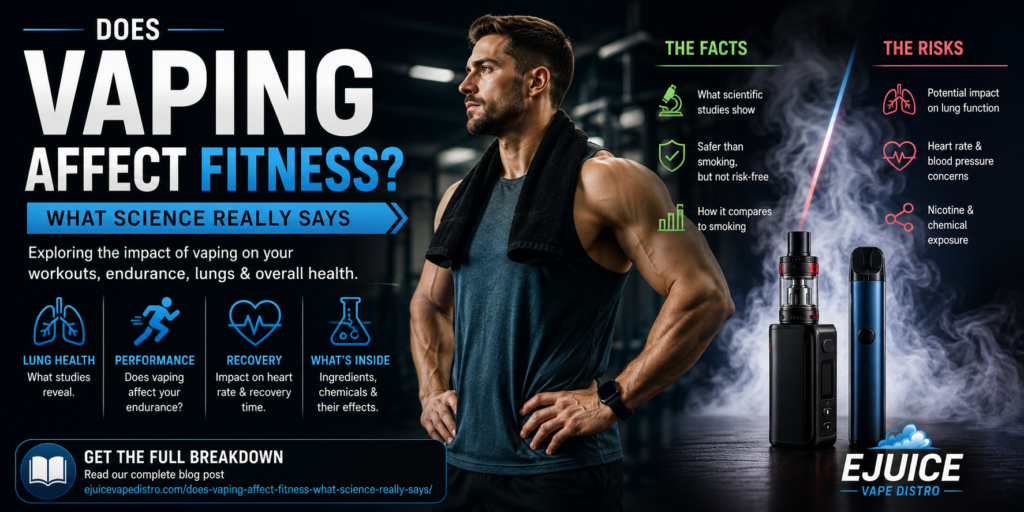
How Vaping Affects Your Cardiovascular System
Nicotine is a stimulant, which means it activates your body’s “fight or flight” response. When you vape, here’s what typically happens in the short term:
- Increased heart rate – Your heart beats faster right after vaping, which can make cardio workouts feel more intense than they should.
- Elevated blood pressure – Nicotine temporarily raises blood pressure, adding extra strain on your cardiovascular system.
- Blood vessel constriction – Nicotine narrows blood vessels, which can slightly reduce blood flow to muscles during exercise.
These effects are usually short-lived, often fading within about an hour. But if you’re vaping frequently throughout the day, your cardiovascular system may be dealing with these spikes more often than you realize.
Does Vaping Affect Your Lungs and Oxygen Uptake?
This is where things get interesting. Several studies have looked at how vaping affects lung performance during exercise, and the results suggest that regular vapers may experience:
- Reduced oxygen uptake (VO2 max) – This is a key measure of how efficiently your body uses oxygen during exercise. Lower VO2 max generally means less stamina.
- Increased airway resistance – Vaping can make airways slightly more resistant, which may contribute to that “harder to breathe” feeling during intense workouts.
- Lower peak exercise capacity – Research comparing vapers, smokers, and non-users found that vapers often perform closer to smokers than to non-users when it comes to exercise capacity.
The good news? These effects appear to be related mainly to nicotine intake and frequency of use — meaning moderation and mindful vaping habits can make a real difference.
Vaping vs. Smoking: Which Affects Fitness More?
If you’re comparing vaping to smoking cigarettes, vaping generally comes out ahead. Cigarettes contain tar and carbon monoxide, both of which directly reduce your blood’s ability to carry oxygen — a major disadvantage for anyone trying to build stamina or endurance.
Vaping doesn’t involve combustion, so it skips the tar and carbon monoxide problem entirely. For people who smoke and are looking to improve their fitness, switching to vaping is often associated with noticeable improvements in exercise capacity over time.
However, it’s important to be realistic: switching from smoking to vaping is a harm-reduction step, not a fitness upgrade. The healthiest option for your lungs and cardiovascular system is always going to be nicotine-free.
Does Vaping Affect Muscle Recovery and Sleep?
Fitness isn’t just about your workout — recovery matters just as much. Here’s where vaping can quietly work against you:
- Sleep quality – Nicotine is a stimulant, and vaping close to bedtime can make it harder to fall asleep and reduce the amount of deep, restorative sleep you get. Since deep sleep is when your body repairs muscle tissue and releases growth hormone, poor sleep can slow down recovery.
- Blood flow to muscles – Because nicotine constricts blood vessels, it may slightly reduce the delivery of oxygen and nutrients to muscles that need to repair after a workout.
- Consistency – Feeling more fatigued or short of breath can make it harder to stay consistent with your training routine, which matters more for long-term fitness progress than any single workout.
Does Vaping Affect Appetite and Metabolism?
Interestingly, nicotine tends to suppress appetite and slightly increase metabolic rate. This is one reason some people notice weight changes when they start or stop vaping. However, using nicotine as a weight management strategy is not a healthy or sustainable approach — any appetite-related effects come with cardiovascular trade-offs that aren’t worth it for fitness-focused individuals.
Tips to Minimize Vaping’s Impact on Your Fitness
If you vape and want to protect your workout performance, here are some practical, easy-to-follow tips:
- Avoid vaping right before or after workouts. Give your body at least an hour before and after exercise so your heart rate and blood pressure can return to normal.
- Skip vaping close to bedtime. Try to stop at least a few hours before sleep to protect your recovery and deep sleep cycles.
- Consider lowering your nicotine strength. Many e-liquids come in a range of nicotine levels — gradually reducing yours can lessen the cardiovascular load over time.
- Stay hydrated. Vaping can contribute to mouth and throat dryness, so drinking enough water supports both performance and comfort.
- Choose quality, regulated products. Always vape responsibly with trusted, well-made e-liquids and devices rather than unregulated products.
- Listen to your body. If you notice persistent breathlessness, unusual fatigue, or a nagging cough, it’s worth checking in with a healthcare professional.
Final Thoughts
So, does vaping affect fitness? The honest answer is yes — nicotine and vaping habits can influence your heart rate, lung efficiency, stamina, and recovery. But context matters. For smokers, vaping is widely seen as a less harmful alternative that may actually support better fitness outcomes over time. For everyone else, being mindful about when, how much, and how often you vape can go a long way toward protecting your performance in the gym.
At the end of the day, fitness and vaping can coexist — it just takes a bit of awareness and moderation. Small adjustments, like timing your vaping around workouts and choosing quality products, can help you stay on track with your fitness goals while still enjoying your vape.
Disclaimer: This article is for informational purposes only and is not a substitute for professional medical advice. If you have concerns about how vaping may be affecting your health or fitness, please consult a healthcare provider.