
 Home
Home Shop
Shop New Arrivals
 Vape Juice
 Salt Nicotine
 Disposable Vape
 Hardware
 Nicotine Pouches
 Clearance
 Blog
BlogNews
Airflow Guide: Tight vs Loose Draw (and How to Dial It In)

Feb
Airflow is one of the most overlooked parts of vaping, yet it plays a huge role in how a device actually feels when you use it. Two vapes with the same e-liquid and similar hardware can feel completely different simply because of airflow. If you’ve ever picked up a device that felt “too tight,” “too airy,” or just not satisfying, airflow was likely the reason.
This guide breaks down tight versus loose draw styles, explains how airflow works in modern vape hardware, and shows you how to dial in a setting that feels right for your preferences. Whether you use refillable setups or disposable vape devices, understanding airflow will help you get more consistency and enjoyment out of every puff.
What Is Vape Airflow?
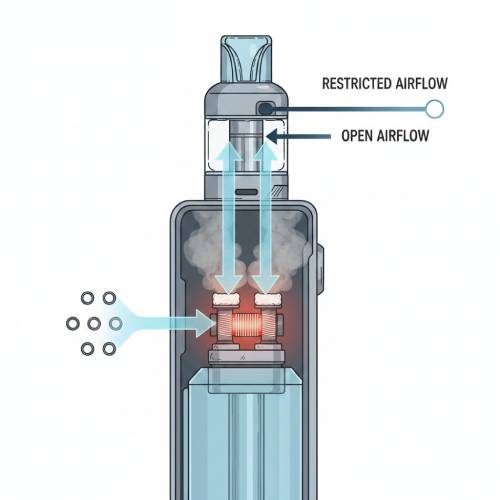
Airflow refers to how much air is allowed to enter a vape device while you inhale. When you take a draw, air moves through intake holes, across the coil, and up through the mouthpiece. The size, placement, and adjustability of those air channels determine how restricted or open the draw feels.
When airflow is restricted, less air mixes with vapor, creating a tighter draw and warmer sensation. When airflow is open, more air mixes in, resulting in a looser draw and cooler vapor. This balance is at the heart of vape airflow control and is why airflow adjustments can dramatically change your experience.
Tight Draw Explained
A tight draw is often described as resistant or restricted. You need to pull a little harder to inhale, and the vapor feels more concentrated. Many people compare this style to sipping through a narrow straw.
Tight airflow is commonly associated with mouth-to-lung vaping, where vapor is first drawn into the mouth before being inhaled. This style emphasizes control and precision rather than volume.
- More restricted airflow
- Warmer vapor temperature
- Focused flavor delivery
- Lower overall vapor output
Tight draws are often preferred by users who want a slower, more deliberate inhale and by those who value flavor clarity over cloud size.
Loose Draw Explained
A loose draw allows much more air to pass through the device. Inhaling feels effortless, similar to breathing in normally. This style is typically used for direct-to-lung vaping, where vapor is inhaled straight into the lungs.
Loose airflow tends to cool the vapor and produce larger clouds. The sensation is airy, smooth, and less concentrated than a tight draw.
- Open airflow pathways
- Cooler vapor
- Larger clouds
- Less draw resistance
This style is popular with users who enjoy cloud production and a more relaxed inhale.
Tight vs Loose Draw: Key Differences
Choosing between tight and loose airflow comes down to how you want your vape to feel. Tight airflow delivers intensity and control, while loose airflow prioritizes volume and smoothness.
A tight draw usually uses less e-liquid per puff and keeps vapor warmer. A loose draw consumes more e-liquid and battery power but produces thicker clouds. Neither is better overall; they simply serve different preferences.
How Airflow Affects Flavor, Vapor, and Heat
Airflow has a direct impact on how vapor is produced. With restricted airflow, the coil stays hotter because less air is cooling it. This often enhances flavor concentration and gives vapor a denser feel.
With open airflow, increased air cools the coil more quickly. Vapor becomes smoother and cooler, but flavor may feel more diluted. Understanding these airflow dynamics helps explain why adjusting airflow can instantly change how a device performs.
How to Tell If Your Airflow Is Too Tight or Too Loose
Airflow issues are often mistaken for coil or battery problems. Recognizing airflow-related symptoms can save a lot of frustration.
- If the draw feels uncomfortable or strained, airflow may be too tight
- If vapor feels weak or overly airy, airflow may be too loose
- If the device feels inconsistent between puffs, airflow may be misaligned
- If flavor seems muted despite good vapor, airflow may be too open
Small airflow changes can often fix these problems instantly.
How Airflow Works in Different Vape Devices
Not all devices handle airflow the same way. Refillable setups often include airflow rings or sliders that allow precise tuning. Many disposables use fixed airflow designed around a specific draw style.
Some modern disposables now include adjustable airflow systems, such as Geek Bar Pulse adjustable airflow, allowing users to fine-tune draw resistance without complicated settings. This has made airflow customization more accessible than ever.
/**/
How to Dial In the Perfect Airflow
Finding your ideal airflow setting takes a little experimentation, but the process is simple.
- Start with airflow fully open or fully closed
- Take short, gentle test pulls
- Adjust airflow in small increments
- Pause between adjustments to let the coil stabilize
- Stop when vapor feels smooth and satisfying
The goal is balance. You want enough airflow to keep vapor smooth, but not so much that flavor and warmth disappear.
Common Airflow Mistakes to Avoid
Many users make airflow changes too quickly or assume more airflow is always better. Over-opening airflow can wash out flavor, while over-restricting it can make vapor harsh.
Another common mistake is accidentally covering airflow holes with fingers while holding the device. This can make the draw feel inconsistent and lead to confusion about performance.
Best Airflow Settings for Different Vaping Styles
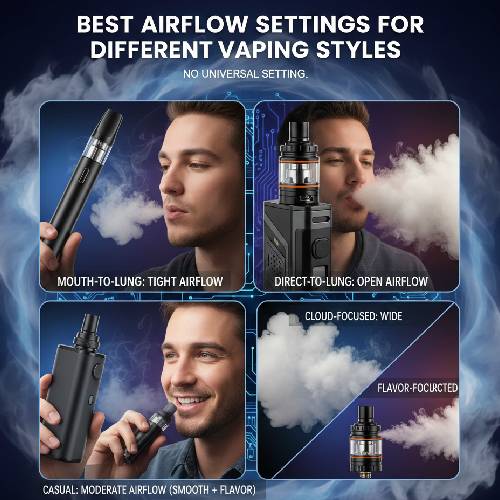
There is no universal airflow setting that works for everyone. Mouth-to-lung users generally prefer tighter airflow, while direct-to-lung users lean toward open airflow.
Casual users often enjoy moderate airflow that balances smoothness and flavor. Cloud-focused users typically open airflow wider, while flavor-focused users tend to restrict it slightly.
How Airflow Impacts E-Liquid and Device Lifespan
Airflow also affects how quickly e-liquid and battery are used. Open airflow allows more vapor per puff, which increases consumption. Restricted airflow uses less e-liquid but may increase coil heat.
Proper airflow adjustment can extend coil life and improve consistency, making vape airflow explained not just a comfort topic but a practical one as well.
Final Thoughts on Vape Airflow Control
Airflow is a personal setting, not a rule. The “best” airflow is the one that feels right to you. Understanding how tight and loose draws work gives you control over your experience instead of leaving it to chance.
By learning how airflow affects flavor, vapor, and heat, you can make small adjustments that lead to big improvements. Once you understand airflow, every device becomes easier to enjoy and easier to troubleshoot.
Frequently Asked Questions
What airflow setting is best for beginners?
Most beginners prefer a slightly restricted airflow that feels controlled without being tight.
Can airflow affect leaking or spitback?
Yes, improper airflow balance can contribute to flooding or spitback in some devices.
Should airflow be adjusted when switching devices?
Absolutely. Different devices are designed with different airflow characteristics.
