
Uncategorized
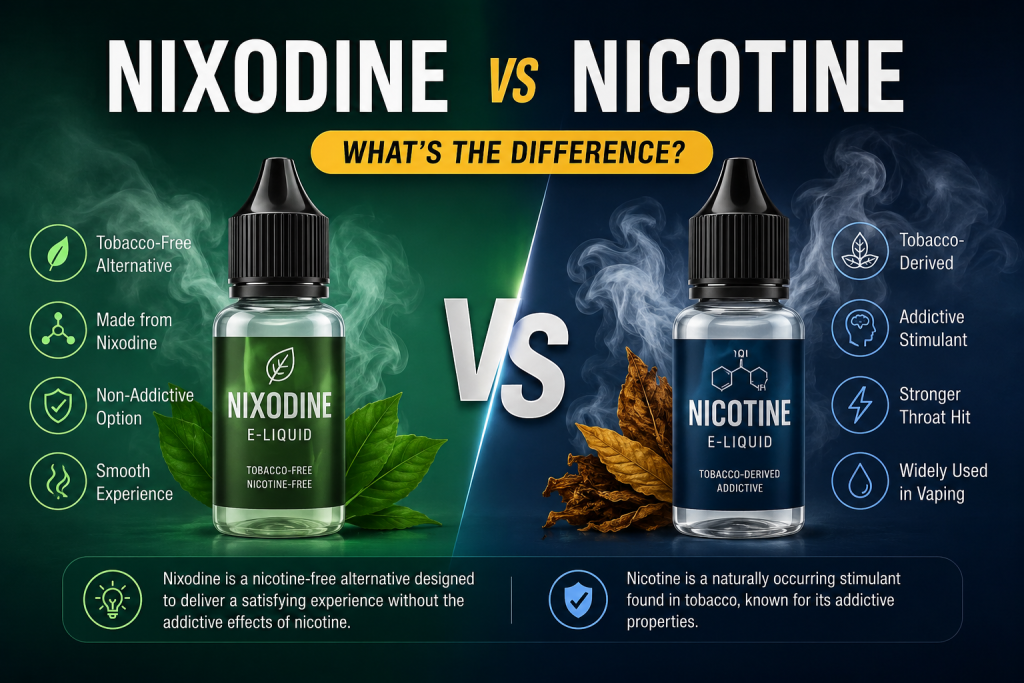
Nixodine vs Nicotine: What’s the Difference?
Aug
Executive Summary
- Nixodine is a new synthetic compound marketed in some vapes and pouches as a “nicotine-free” alternative. In reality, nixodine often refers to either 6-methylnicotine (a nicotine analogue) or nicotinamide (vitamin B3). Its properties and safety are largely untested.
- Nicotine is a well-known tobacco alkaloid (C₁₀H₁₄N₂) that strongly binds nicotinic acetylcholine receptors in the brain. It is highly addictive and the primary reason cigarettes and vapes are habit-forming.
- Health & Addiction: Studies indicate 6-methylnicotine (6‑MN) may be more potent and toxic than nicotine in animal tests. By contrast, nicotinamide does not activate nicotine receptors or produce a “buzz”. The health effects of inhaling either form of nixodine are unknown, raising concerns.
- Regulation: Nicotine-containing products are tightly regulated (FDA in the U.S., TPD in the EU/UK), but analogues like nixodine currently fall into a legal grey area. Manufacturers often market them as “PMTA-exempt” or “tobacco-free” to bypass rules.
- Implications for Vapers: Vapers should be cautious. Stick to known, regulated products (nicotine e-liquids, pouches) and avoid unverified analogues. Always check labels and legal status – misleading marketing for nixodine is common.
Definitions and Chemistry
Nicotine: Definition & Chemistry
Nicotine is an alkaloid found naturally in tobacco plants. Its molecular formula is C₁₀H₁₄N₂, and it has two enantiomers [(S)-nicotine is the active form]. As a chemical, nicotine is a colourless, oily liquid with a pungent odor. In the body, nicotine stimulates nicotinic acetylcholine receptors, causing stimulant and rewarding effects. All tobacco products (cigarettes, vapes, pouches) contain nicotine, which is why they are addictive.
Key point: Nicotine’s chemistry and effects are well documented. It passes quickly to the brain when inhaled, leading to addiction and health risks (see below).
Nixodine: Definition & Chemistry
“Nixodine” is not a single chemical, but a brand name used for novel nicotine-alternative formulations. According to industry sources, many so-called nixodine products contain 6-methylnicotine (6-MN), a lab-made analogue with an extra methyl group on the nicotine molecule. By structure, 6-MN is the “methyl-homologue” of nicotine – essentially nicotine plus one CH₃ group. This analogue has been sold under names like Metatine (in disposable e-cigs) and Nixodine-S.
Other nixodine products are actually nicotinamide (niacinamide, vitamin B₃) in disguise. Nicotinamide is a legitimate dietary vitamin with chemical formula C₆H₆N₂O, completely unrelated to nicotine. Some e-liquid makers label nicotinamide blends as “Nixodine” or similar proprietary names. Importantly, unlike 6-MN, nicotinamide has no known activity at nicotine receptors.
Summary: Nicotine is a natural tobacco alkaloid. Nixodine products either use 6-methylnicotine (a potent nicotine mimic) or nicotinamide (vitamin B₃). Both are chemically distinct from nicotine, and their behaviour in the body may differ significantly.
Health Effects & Toxicity
Nicotine’s Health Effects
Nicotine itself is not classified as a carcinogen, but it is pharmacologically active and toxic at sufficient doses. Acute nicotine poisoning can occur if liquid is swallowed or absorbed (especially dangerous for children). Nicotine constricts blood vessels, raises heart rate and blood pressure, and can upset hormone and metabolic pathways. It is also a known teratogen – harmful to fetal development – making it a health danger in pregnancy.
However, most of the long-term harm from tobacco smoking comes not from nicotine but from thousands of combustion chemicals (tar, carbon monoxide, etc.). In other words, nicotine primarily causes addiction and some cardiovascular strain, but smoking/vaping adds many other toxins. Even so, vaping-related studies show nicotine can damage adolescent brains (which develop until ~25 years of age). Youth who vape nicotine may also be at higher risk of future addictions.
In summary, nicotine is highly addictive and not harmless. Its acute toxicity is well-documented, and chronic use (via tobacco or vaping) is associated with cardiovascular disease risk and impact on brain development.
Nixodine’s Potential Effects
Because Nixodine is new, human data are very limited. Early research paints a worrying picture. For the 6-methylnicotine form, laboratory studies indicate it may be more active and harmful than nicotine. For example, Duke University researchers note that rodent tests found 6-MN to be “far more potent than nicotine” at brain receptors and “more toxic” in animal experiments. Similarly, a German risk assessment (BfR) concludes that 6-MN is “at least as harmful to health as nicotine” and likely equally addictive. 6-MN has been shown to trigger more oxidative stress and inflammation in cells than nicotine, suggesting possible greater lung toxicity.
In contrast, the nicotinamide form of Nixodine shows no nicotine-like physiological effect. Nicotinamide does not stimulate nicotine receptors or produce dopamine release. Essentially, vaping vitamin B₃ yields no “buzz”, but we simply do not know the safety of heating and inhaling it. Heating nicotinamide could potentially form unknown byproducts, so its “safety” by inhalation is not guaranteed, even if oral doses (under 3 g/day) are generally safe.
Importantly, no independent clinical trials or long-term studies of nixodine exist. Regulatory scientists explicitly state the quality of data on 6-MN is very low and inhalation toxicity is untested. Thus, any health claim for nixodine should be met with skepticism. The available evidence suggests caution: 6-MN could be more harmful than nicotine, and nicotinamide’s effects when vaped are unknown.
Addiction Potential
Nicotine is famously addictive. It rapidly alters brain chemistry and creates dependence. Signs of nicotine addiction include intense cravings, withdrawal symptoms (irritability, anxiety, difficulty concentrating) and growing tolerance. Nicotine’s addictiveness is why tobacco products are hard to quit.
For nixodine, the addiction picture depends on which compound is used:
- 6-Methylnicotine (6-MN): Animal studies show 6-MN can produce a nicotine-like “buzz” at lower doses than nicotine. Because 6-MN binds nicotine receptors even more strongly, it could be more addictive than nicotine. (The BfR risk profile infers comparable uptake to nicotine, implying similar potential for dependence.) Vapers seeking nicotine’s effect might unwittingly get hooked on 6-MN if it’s in the product.
- Nicotinamide: Since nicotinamide does not activate nicotine receptors, it is not inherently addictive. A “Nixodine” product that contains only vitamin B₃ should not cause nicotine cravings. However, some of these products also include undisclosed 6-MN or other nicotine analogues. In practice, anyone using so-called nixodine vapes may be exposed to minute amounts of 6-MN (and flavorings) that can drive addiction.
In short: nicotine causes addiction; 6-MN likely does too (possibly even more strongly); nicotinamide alone does not. Without clear labelling, users cannot know what they’re vaping. This ambiguity is concerning for addiction risk.
Legal and Regulatory Status
Nicotine products are tightly regulated. In the UK and EU, e-cigarette liquids are limited to 20 mg/mL nicotine and require safety/ingredient testing under the Tobacco Products Directive. In the U.S., FDA oversight (via PMTA and Youth Tobacco Prevention laws) covers all products containing “nicotine from any source” as of 2022. Plainly, cigarettes, vapes, nicotine pouches, and even synthetic-nicotine vapes must be approved or removed.
By contrast, nixodine/analog products have only recently come to light and often fall outside existing rules. The FDA’s tobacco authority did not explicitly list 6-methylnicotine or nicotinamide, so many manufacturers claim exemption. For example, one disposable vape containing 5% 6-MN boldly claimed it was “exempt from FDA tobacco-product regulations”. Regulators are scrambling: U.S. agencies have noted the potency of these analogs and may act, but as of 2026 no formal approval exists for nixodine products. In some countries, steps are being taken. The EU’s RIVM has proposed emission limits for 6-MN, and Australia’s TGA is considering listing it as a dangerous poison.
Labels & Claims: Nixodine products are often marketed as “tobacco-free,” “PMTA-exempt,” or even “FDA-approved”. These claims can be deceptive. Studies found that “Nixodine” liquids often contain less 6-MN than advertised, plus undisclosed additives like high-intensity sweeteners and cooling agents. Brands have also ambiguously named products “Nixodine” while quietly adding nicotine analogues. Consumers should be wary: if a vape advertises a nicotine alternative, it may be taking advantage of regulatory loopholes.
UK Law: In the UK, sale of nicotine vapes is restricted to over-18s, and disposable vapes are banned. Nixodine analogues are not explicitly addressed, but selling unregulated chemicals as “not nicotine” would likely violate consumer safety laws. In any case, parents and retailers should enforce the age restrictions with all vape products.
Common Uses
Nicotine is used in many products. Beyond traditional cigarettes and cigars, common nicotine delivery systems include:
- E-cigarettes (vapes): Disposable or refillable devices using nicotine salts or freebase nicotine. Sold in strengths from 0 mg (nicotine-free) up to 20–50 mg (depending on device type).
- Nicotine pouches and chewing tobacco: Tobacco-free pouches containing nicotine (often marketed for discreet use).
- Nicotine replacement therapies (NRT): Medicinal products (gum, patches, lozenges) for quitting smoking, all delivering controlled nicotine doses.
Nixodine analogues have appeared in:
- Disposable vapes: Brands like Spree Bar, SBX, Outlaw Dip, Kumi Six and others now offer models loaded with 6-MN instead of nicotine. For example, Spree Bar “Pulse X” was labeled as 5% 6-MN. These come in flashy flavors appealing to young adults.
- Nicotine pouches: Some companies (Nicotine River, ECBlend, Oasis Vape) sell “zero-nicotine” pouches branded as Nixodine, Nixamide, Nixotine, etc. In reality, early analyses showed these contained nicotinamide, and later versions admit to adding small amounts of 6-MN.
- E-liquid bases: A few e-liquid manufacturers mix 6-MN (or nicotinamide) into bottles of vape juice, claiming to “mimic nicotine” without being regulated as tobacco. These are rarer but exist in the U.S. market, often labeled “NoNic6” or “NIC-SAFE”.
In short, if you see a vape or pouch advertised as “Nixodine” or “nicotine-free” but tastes like nicotine, it is likely one of these new analog products.
Safety & Labeling
Nicotine Safety: Users of nicotine vapes still face risks. E-cigarette aerosol can carry toxicants (metals, flavoring byproducts, carcinogens), though generally at lower levels than cigarette smoke. Nicotine itself is toxic in high dose (nicotine poisonings from e-liquid ingestion occur in children). Chronic nicotine exposure can impair cardiovascular health and brain development. That said, for adult smokers switching completely to vaping, most public health bodies consider vaping less harmful than smoking, as long as it’s used only for cessation.
Nixodine Safety: There is essentially no safety data on inhaling 6-methylnicotine or nicotinamide. Regulators warn that without independent studies, the health impact is unknown. The German BfR explicitly states 6-MN products “pose a health risk” and urges users to avoid them. Lab tests found that vaping 6-MN liquids produced more reactive oxygen species and cell damage than equivalent nicotine liquids. In animal studies, 6-MN caused seizures and high blood pressure at lower doses than nicotine.
Nicotinamide by itself is not known to be harmful – it is a common dietary vitamin. However, inhalation is different from eating a vitamin. Heating nicotinamide may generate new chemicals, and the doses used in vapes (up to 20 mg per pouch or a few percent in juice) could have unexpected effects. A retired researcher noted high oral doses (>3 g/day) can damage liver or kidneys; while vapers are not likely to swallow that much, inhalation effects remain unknown.
Labeling Issues: A major concern is mislabeling. One JAMA study found products sold as “Nixodine”/“Nixotine” often contain less active ingredient than claimed and hide additives. For instance, e-liquids labeled 5% 6-MN actually had only ~6 mg/g (about 0.6%). Some flavorings also included synthetic sweeteners and coolants not listed on the label. Even worse, liquids labeled as nicotinamide-only (“Nixodine”) were found to contain trace 6-MN. In practice, this means consumers cannot trust that “nicotine-free” products are truly free of addictive analogues or toxins.
Conclusion on Safety: Nicotine vapes carry known but manageable risks (always nicotine, so expect addiction). Nixodine products carry unknown risks that could be higher. There is no demonstrated safety benefit; in fact, they may be more dangerous. Until research catches up, health agencies recommend avoiding them.
Comparative Table of Key Attributes
| Attribute | Nicotine | Nixodine (6-MN) | Nixodine (Nicotinamide) |
|---|---|---|---|
| Chemistry | Tobacco alkaloid C₁₀H₁₄N₂; naturally in Nicotiana | Synthetic analogue C₁₁H₁₆N₂ (methylated nicotine) | Vitamin B₃ (niacinamide); formula C₆H₆N₂O |
| Source | Tobacco plant, or synthetic “tobacco-free nicotine” | Lab-produced chemical; not plant-derived | Purified vitamin; often food-grade |
| Mechanism | Activates α4β2 and other nicotinic receptors | Activates the same receptors, often more strongly | Does not activate nicotine receptors |
| Addiction | Highly addictive; causes cravings and withdrawal | Likely addictive; animal studies suggest stronger potency | Not addictive (no receptor activity) |
| Health Effects | Risks: cardiovascular strain, development harm, nicotine poisoning; chronic use linked to lung/COPD indirectly | Possibly more toxic: studies show increased cell damage and inflammation | Unknown from inhalation; oral use safe under 3 g/day, but inhalation effects unstudied |
| Regulation | Covered by tobacco laws (FDA, EU/UK TPD); sale to minors prohibited | Not specifically named in most regs; currently unapproved by FDA; in EU/US regulatory loophole | Same as 6-MN when sold as “Nixodine”; not declared under tobacco rules |
| Common Uses | E-cigarette e-liquids (freebase or salts); cigarettes; nicotine pouches; NRT | New disposable vapes (e.g. Metatine/Spree Bar, Outlaw Dip) and vape juices labeled nicotine-analog | Marketed in “Nixodine” pouches and vape liquids; mostly deceptive usage (as nicotine replacements) |
| Safety Profile | Well-studied; acute toxicity known; many regulations and warnings exist | Unknown long-term safety; German regulators advise it poses health risk comparable to nicotine | Unknown inhalation safety; oral exposure safe at low dose, but inhalation byproducts unknown |
Implications for Vapers and Choosing Products
For vapers and smokers, the practical takeaway is clear: stick with proven nicotine products or nicotine-free e-liquids, and be wary of “nixodine” gimmicks. If you currently smoke or vape nicotine and seek satisfaction, continue using regulated nicotine delivery (whether cigarettes, nicotine salts, or approved NRT) rather than experimenting with unverified analogues. If you prefer no nicotine, simply use 0 mg e-liquids or flavorings – do not reach for nixodine products marketed as “safe buzz.”
The decision tree below outlines the thought process for choosing a product:
flowchart LR
    A[Adult (18+)?] -->|No| End((Stop: not legal to vape))
    A -->|Yes| B{Seeking nicotine buzz?}
    B -->|Yes| C[Use regulated nicotine vape/pouch]
    B -->|No| D[Use 0mg e-liquid (nicotine-free)]
    C --> E{Product licensed/approved?}
    E -->|Yes| F[Proceed safely]
    E -->|No (nixodine)?| G[Avoid/Use with caution]
    D --> H[Product appears safe?]
    H -->|Yes (e.g. known ingredients)| F
    H -->|No (unknown analog)| G
Figure: Vaping product decision flowchart for adult users (hobby vapers or smokers).
- Check legality and labelling. Ensure the product is age-appropriate and clearly labeled. If it’s a nicotine vape, it should state nicotine content and have health warnings. If a “nicotine-free” product claims to target nicotine receptors (as some nixodine marketing does), that claim is misleading. Look for third-party labelling or stick to reputable brands. For example, Geek Bar offers a nicotine-free model (Pulse Zero) for those who want flavor without nicotine; this is safer than unknown analogs.
- Beware of marketing loopholes. Many nixodine products emphasize “vitamin B” or “natural” to imply safety. Don’t be fooled. Independent studies have found discrepancies between labels and contents. If a vape is not in the main product listings (for example, you only find it online or grey market), it may contain illicit analogs.
- Prioritise transparency. Choose e-liquids from reputable sources that list ingredients and comply with regulations (e.g. TPD/UK e-liquid registrations, or FDA marketing orders in the U.S.). Our Disposable Vapes and Salt Nicotine categories feature products with clear labeling. Internal research shows that many analog-laden products lacked disclosure, so a label that says only “nicotine” or “0mg” is preferable to something saying “Nixodine” without specifics.
- Monitor flavour and strength. Youth-appealing flavours and high puff-count devices are common vectors for nixodine. The Duke Health team warns these analog vapes are often fruit- or candy-flavored. If a disposable vape has an unusually high puff count or exotic flavors, double-check that it’s legit. Our Geek Bar pricing guide notes that even reputable brands offer 0mg flavored options – use those instead of untested blends.
- Stay informed and consult experts. The science is evolving. Regulatory agencies (like the FDA and EU health bodies) and research institutions (such as Duke and UW-CTRI) are actively reviewing nicotine analogs. Follow updates from credible sources rather than social media. If in doubt, consult a pharmacist or doctor, especially for quitting smoking. Nicotine itself can be delivered via approved therapies (patches, gum) if you need help quitting, rather than via novel analogs.
Conclusion
- Nixodine is a marketing name for either 6-methylnicotine (a synthetic nicotine analogue) or nicotinamide (vitamin B₃). Both are very different from standard nicotine, and neither is proven safe when vaped.
- Scientific studies so far suggest 6-methylnicotine may be at least as potent or toxic as nicotine, potentially increasing addiction risk. Nicotinamide (a vitamin) does not mimic nicotine’s effects, but inhalation safety is unknown. Marketing claims for “Nixodine” are unsupported by evidence and can be misleading.
- Nicotine, by contrast, has well-documented effects. It is highly addictive, toxic at high doses, and harms developing brains. However, its risks are understood and regulated. For vaping, nicotine-containing e-liquids are subject to quality controls (e.g. TPD or FDA PMTA) that nixodine products currently evade.
- Advice: Stick with legally approved, clearly labeled products. If you use nicotine, choose reputable vape juices or NRT and follow local age laws. If you want no nicotine, use marked 0mg fluids or devices. Avoid any vape or pouch marketed as “Nixodine” or “nicotine-free nicotine analogue” – the true content and effects are unverified.
- Actionable tips: Always read the label and ingredients. Check that the device meets regulatory standards (our Vape Devices section can help you find compliant products). Be wary of flashy disposables with unfamiliar chemical names. For reliable quitting help, consult FDA-approved resources (NHS Quitline or pharmacies).
